Tuesday, October 15, 2013

What motivates someone to collaborate? Five essential needs that must be met.

Recently, I was invited to participate in a workshop to address the question “How might we motivate people to participate in complex interdisciplinary problem-solving initiatives?”  The premise here was that this is not about the committee your boss directed you to join, but rather about complex problems where the solution is not clear, where many possible solutions may exist and where it is not clear who should participate or you don’t have the functional relationship to direct people to participate.

The workshop was designed as a “Deep Dive”, a facilitated process to help a group collaborate to design creative solutions that are focused on user needs.  I won’t go into the details of the process here, but I will say that there was an emphasis on what is sometimes called empathetic, or active, listening, which is listening to really understand the needs of the other person.

To help us, as participants, get a better understanding of the issues around motivation, we were asked to interview people who have experience organizing and managing teams.  Using active listening, we attempted to tap into their knowledge and experience.  We wanted to understand what motivated people to collaborate in teams and what they learned about leading teams of people in a collaborative initiative.  The interviewees were quite diverse in their level, type of work and years of experience, ranging from junior analysts up to an acting Deputy Minister.  They were similar, however, in that they all had considerable experience organizing, managing and motivating teams to help them achieve goals. In many cases, this meant motivating people with whom they did not have a direct reporting relationship.  Collectively, my fellow workshop participants and I interviewed over 20 people.

From these interviews, a wide variety of knowledge and experience was shared.  Yet, there was a lot of similarity in what was said.  Out of all this information, we were able to identify the five key needs below (in order of importance).  Think of these as needs that must be met in order for someone to volunteer to participate in an initiative that you might be leading. 

1) Efficiency
-         Nobody volunteers to join a team because they want more work. Potential participants will always ask themselves, “What’s in it for me?”  In particular, it must be clear to the potential participant how their involvement in the team will help them do whatever it is they are interested in doing more effectively or more quickly.  Perhaps, their involvement will help them learn a new skill; perhaps it will help them network with other experts in their field; perhaps they can influence something that will have an impact on them.  Whatever it is, they will have a need to do something more efficiently.   In addition, potential participants in your team will want to know how they can add value.    These two questions, “What can I contribute?” and “What can I take away?” must align with the objectives of the team in order for potential participants to consider becoming involved.

2) Clarity
The people we interviewed made it clear that there are several items potential participants often need to be clear about before they will commit to join a team, including:
  • Clarity on the goals of the team and the desired outcomes. The goals and outcomes need to align with their interests, available time, and what they can take away or they will get out of it.
  • Clarity on the context for the team. Why is the team being constituted? Who has asked for the outcome?
  • Clarity on their role. It’s your job as a team leader to help participants see how they can contribute and remind them of the value of their contribution.  It’s also important to remember that success is a shared responsibility among all members of the team.  It is not just the Chair’s responsibility.  
  • Clarity on the process.  Participants need to feel that the process is logical and has a high chance of leading to a successful outcome.  To this end, it is important that the leader or Chair be honest and transparent throughout the process.
  • Clarity on how members expect to interact with one another.  For example, sometimes, you have to overcome a culture of hierarchy where people defer to the highest ranking member at the table.
  • Clarity on credit.  Being acknowledged for one’s work is important.  As the leader or Chair, it’s you must ensure that credit is given where it is due, and not taken when it is not due. Celebrate the small achievements.

3) Purpose
-         Purpose does not refer to the aim or goal of the team, but rather to need of participants to know that their involvement will contribute to something greater.  Participants want to know that they will have an influence on a larger issue that is of interest to them.  Nothing is more demoralizing for a team member than the realization that they are involved in a consultation disguised as a team - where a Chair is only interested in checking a box to say that they had broad involvement but is not really interested in the contributions of team members. 

4) Autonomy
-         Team members need to have some control over how they contribute.  This does not mean that it is a total free-for-all in terms of everyone doing their own thing.  As the Chair or leader, it is your job to ensure a shared understanding of the desired outcomes and the tasks required to reach the goal.  You need to highlight what needs to be done and then set the conditions to allow members to commit to the work.  Start by talking to your participants to understand their interests and let them help develop the process and associated tasks.   Help members understand how they can contribute or find ways for two or three members to share responsibility for a task.  Emphasize that success is a shared responsibility, not just the Chair’s. Don’t position tasks as something interesting that someone might want to take on, rather, position tasks as essential to the success of the team that someone must take on.  Not all tasks are glamorous and some are just a sheer grind, but your best chance of success is getting someone to volunteer.  Whatever you do as the team leader, do not micromanage the tasks.  The people I interviewed all agreed that it was better to define the task result and then let the responsible team member have ownership on how to deliver on the task.   

5) Safety
-         The people we interviewed shared a view that it is essential to create a safe environment for the members to participate fully.  This means both an intellectual and emotional safe space -a place where differences of opinion are respected, even if they are not agreed with.  Constructive criticism is OK, but personal attacks are not. Remember, people like to stick to their disciplines.  There is a fear of being criticized.  There is also a strong culture of hierarchy in some organizations (e.g whatever the highest ranking member of the team says is true).  There is also sometimes a culture of protectionism (it’s my knowledge, I did the research, I own it). Set ground rules everyone can agree on early on in the process or develop a team charter that defines how members will interact.

The needs identified above are not exhaustive.   They are the top 5 needs that we identified from the information we collected from our interviews. Participants may have other needs that must be met depending on the circumstances.  Nor does meeting these needs guarantee involvement in an initiative.  These are basic, minimum needs that interviewees told us must be met in order for a potential participant to consider becoming involved in a collaborative initiative.  Without having met these basic needs it is unlikely that someone will become involved in an initiative.  They are a necessary pre-condition for involvement, but do not guarantee involvement.

As a leader, or someone trying to encourage participation in a team it is important that you think about the needs of the participants. Put yourself in the shoes of the person receiving your request.  What is their context? Why would they want to participate? You must align what you want as leader with the participants’ interests, time and needs.

In addition, our interviewees spoke about the importance of developing relationships with team members.  Team building is the key to a successful team.  Fostering strong relationships is crucial to ensuring strong commitment to actions. Our interviewees suggested spending time one-on-one with team members, even if it’s only a few minutes.  Get to know little things about the members and remember those things for the next conversation.  A little personal interest goes a long way.

Finally, stay focused on action.  Remember, action is the end goal, not just talking. 

Speaking of action, I invite you to share your experience leading or participating in a team.  Do the needs identified here resonate with you?


Monday, January 14, 2013

State of Ontario's Forests Report released

According to a news release posted on http://www.woodbusiness.ca/industry-news/state-of-ontarios-forests-report-released

The Ministry of Natural Resources recently released The State of Ontario's Forests Report, (April 2004 to March 2009) and not surprisingly it reflects the recession the forest industry experienced during the period.

Produced every five years, the report highlighted the major economic downturn the forest sector experienced, including:
• Annual harvesting levels dropped by 10 million cubic metres (43%) over the five-year period;
• While employment levels increased from 2001-2004, forest sector jobs were lost at an average rate of 11% per year from 2001-2006; and
• Estimated operating surpluses (a measure of profitability) decreased by approximately $1.1 billion (57%) in the wood products sector and $814 million (29%) in the paper manufacturing sector over the five-year period.

This is Ontario's third State of the Forest Report. The reporting period for the report is April 2004 to March 2009.  This legally mandated report describes Ontario's forests and forest management, based on a criteria and indicators framework for sustainable forestry. Criteria reflect provincial forest sustainability goals and are designed to reflect public values and desired long-term outcomes for Ontario's forests. Indicators are specific measures used to assess progress towards the achievement of forest sustainability goals and objectives.

The latest State of Ontario's Forests report is comprised of a feature report and a supporting Criteria & Indicators interactive PDF. The feature report focuses on specific themes (state of the forest sector, biodiversity, forest health, and climate change) and provides a high-level summary of the Criteria & Indicators framework.

The official site for the State of the Forest Report is: http://www.mnr.gov.on.ca/en/Business/Forests/2ColumnSubPage/STDPROD_101854.html
The Report can be downloaded from: http://www.mnr.gov.on.ca/stdprodconsume/groups/lr/@mnr/@forests/documents/document/stdprod_101907.pdf

And the interactive Criteria and Indicators PDF can be downloaded from: http://www.web2.mnr.gov.on.ca/mnr/forests/public/publications/SOF_2011/toc_main.pdf

Friday, April 20, 2012

Mobilizing knowledge in the Canadian Forest Service


Through its Policy Framework for Information and Technology, Treasury Board has made it clear that information is an essential component of effective management across the Government of Canada.  The availability of high-quality, authoritative information to decision makers supports the delivery of programs and services, thus enabling departments to be more responsive and accountable to Canadians.

Accordingly, within Natural resources Canada, much effort is put into ensuring that the department’s information services, like the intranet, the wiki, and online databases, provide quick and easy access to information. Still, the uptake of research results by policy and decision makers may be lower than desired, not because of any shortcomings in a set of research results or the dissemination strategy used, but because potential users are unwilling or unable to exploit the opportunities presented to them.

Decision-making and management activities must integrate various types of information in a complex environment comprised of political, economic, and social factors.  The challenge is how to acknowledge and integrate social, economic and political context into knowledge systems. We must go beyond simply aiming to provide a “one-stop shop for information.”  Instead, what decision makers and policy analysts need is not just the facts, but, a set of solution options that are informed by research-based knowledge within the decision context

Much work has been done to look at ways to improve the uptake of research outputs by decision- and policy-makers in the health sciences field. For example, Lavis and colleagues (2003) identified three methods to enhance research utilisation by policy-makers: producer push, user pull and knowledge exchange. A similar framework for knowledge management, described as learn before, learn during and learn after, has been advanced by Collison and Parcell in their 2001 book Learning to Fly.

The paradigm of producer push, user pull and knowledge exchange includes knowledge transfer and knowledge translation, which are usually seen as a unidirectional flow of knowledge. But it also includes iterative knowledge exchange. In contrast to knowledge transfer and knowledge translation, knowledge exchange involves bringing together researchers and decision makers and facilitating their interaction, which starts with collaborating on determining the research question.  The ongoing exchange and knowledge transfer ensure that the knowledge generated is relevant and applicable to stakeholder decision making as well as useful to researchers.

Phipps and Shapson (2009) incorporated these three methods together with the concept of knowledge that is co-produced between researchers and research users to define knowledge mobilization.  They define knowledge mobilization as a suite of services using a diverse array of strategies that connect researchers and research users to enhance research utilization.

While not explicitly working in the area of knowledge mobilization, the Forest Knowledge and Information Management Division (FKIMD) of the Canadian Forest Service (CFS) is attempting to find ways to enhance the impact of CFS scientific research outputs for decision makers, policy analysts and advisors who seek quality scientific information that is relevant to their work and will impact decisions while being accessible and understandable in the shortest possible time.  The objective of FKIMD's activities is to ensure the discovery, use and dissemination of all information of business value created by the CFS for the delivery of the sector's programs and services.  As well, the division seeks to ensure that IM practices within the the sector are compliant with the Directive on Recordkeeping (as required by March 2014), and that information management standards are aligned with government standards, such as the Standard on Geospatial Data. Finding the right tools and services to effectively mobilize the organization’s knowledge is a complex problem that will evolve.

The Division has not previously described its work in terms of knowledge mobilization, but it may be useful to set the division's work in the context of the four established knowledge mobilization methods (producer push, user pull, knowledge exchange and co-production) used by Phipps and Shapson (2009) to describe the knowledge mobilization services of York University’s Knowledge Mobilization Unit. In this way, the work of FKIMD can be compared with an established knowledge mobilization unit.

The comparisons suggest that the activities being undertaken by FKIMD are consistent with Knowledge Mobilization activities undertaken by other science-based organizations and should help the CFS mobilize its knowledge to ensure that decision makers and their support staff have access to quality information that is relevant to their work and that impacts decision making.  The only notable exception to this is the relatively limited role of activities in knowledge pull, characterized at York University by the "help desk", where knowledge brokers help facilitate the introduction of a knowledge requester to a knowledge producer and support any emerging conversations that might lead to collaboration.


KMb MethodFKIMD activityNotes
Producer PushPlain language research summaries
Plain language summary that provides a concise summary of the key S&T messages or findings of an S&T publication using simple language that would be appropriate for an audience of non-technical experts in the subject of the publication.
Knowledge retention interviewsInterviews of departing employees and presentations and discussions by departing employees with peers
Directory of expertiseAn online tool to allow knowledge users to find subject matter experts in NRCan
Publications databaseAn improved database of publications that provides access to all CFS publications
User Pull
Knowledge ExchangeCommunities of practiceFostering communities of practice as stewards of knowledge
Project-level knowledge exchange strategiesPilot studies to adapt the Results Map process to bring together knowledge producers and knowledge users to co-create knowledge products
Collaboration / Co-production InfrastructureSimplified disposition authoritiesReducing the number of disposition authorities in NRCan from 64 to about 10 and expanding their coverage from about 60% of all information to 100%
Centralized digital repositoriesImplement GCDocs as a central digital repository for all digital files of business value that will replace shared drives and SharePoint.  Could have collaborative functions in the future
Paper Legacy Information StrategyA strategy to enhance the search and retrieval of CFS’ unmanaged and semi-managed paper legacy documents
Foogle - Integrated data setsAn online tool to catalogue, integrate and access CFS digital data sets
Social media to support collaborationAlthough not a product of FKIMD, the department and the GoC does have a full suite of social media tools including blogging, wikis, forums, SharePoint.  In addition, new Guidelines for External Use of Web 2.0 encourage employees to use social media tools like Twitter and Linked In.


For more detailed information, read my draft paper, Characterizing the work of Forest Knowledge and Information Division within the context of Knowledge Mobilization.


Tuesday, April 17, 2012

Setting an enabling environment for knowledge sharing

Fancy IT systems and a web of processes and procedures will not increase the flow of knowledge within an organization if the culture of the organization does not value or promote knowldege sharing.  In fact, "setting an enabling environment is fundamental to allowing sharing to happen naturally" (my emphasis added to fundamental), say Chris Collison and Geoff Parcell in their book Learning to Fly: Practical Knowledge Management from Leading and Learning Organizations.

Collison and Parcel looked at knowledge management within organizations from a variety of contexts, and determined that there are some common threads.  In particular, an enabling environment has been achieved by:

  1. A reinforcing leadership style, which challenges and encourages learning and sharing.
  2. Encouraging the right behaviours; behaviours that acknowledge peoples strengths, involve active listening, challenge the status quo, develop relationships and build trust.
  3. Taking the time to understand each other, developing shared beliefs and a common vision.
  4. Building facilitation skills to enable people to find their own solutions.
  5. Good change management capabilities, for example include those affected in the planning, the execution and the outcome.
  6. Collaborative working and learning together from shared experiences.
  7. Common technology that connects people, removes barriers, and makes information widely available.
As I read these seven points for creating an enabling environment for knowledge to flow, I immediately saw similarities with the seven challenges for a learning organization described by Bob Chartier in his book Tools for Leadership and Leaning, building a Learning Organization, and indeed, the role of the Learning Organization Community of Practice in my own organization.

In his book, Chartier describes seven challenges that must be overcome to enable leaders to tap the team's collective wisdom and to share decision-making.  These are:
  1. Shared vision and values
  2. Personal mastery
  3. Systems thinking
  4. Mental models
  5. Team Learning
  6. The Learning Vessel
  7. The art of conversation
Overcoming these seven challenges is the central domain of knowledge upon which the Learning Organization Community of Practice in my organization is focused.  Facilitation is the practice community members engage in to help the organization overcome these challenges.

It is not hard to see the links between Collison and Parcell and Chartier, and I have tried to map the linkages below:
  • A reinforcing leadership syle --> Mental Models
  • Encouraging the right behaviours -->  The art of conversation, personal mastery
  • Taking the time to understand each other --> Shared vision and values
  • Building facilitation skills --> LOCOP
  • Good change management capabilities --> Systems thinking
  • Collaborative working and learning together -->Team learning, The Learning Vessel
The mapping is not perfect and one could probably see other ways to map the two authors' key points together.  Also, Collison and Parcell's point about building facilitation skills does not link to one of Chartier's challenges, but is one of the objectives of Chartier's book and also an important role for the Learning Organization Community of Practice in my organization. Still, the mapping serves to illustrate how the efforts of our Learning Organization Community of Practice are helping to set the enabling environment for effective knowledge flow in our organization. Sometimes, the culture change, which is slow and subtle, goes unseen in the light of other flashy IT products like wikis, search tools, forums, blogs and directories of expertise.


Friday, March 30, 2012

To get people to learn, you must give them a reason to care

I stumbled across this recent blog post about "Learning as Care" by Nick Shackleton-Jones recently.  In the post, Shackleton-Jones makes the point that the most important part of getting anyone to learn something is getting them to care.  Here are some highlights from his post:

  • if people really cared about something we would have no work to do. And if we can't make people care, then we have usually done no work
  • we disseminate information without giving people a reason to care
  • we fail to provide learning resources to people who do care
  • don't tell people what is important, tell them?why, tell the story
  • care is the central mechanism at the heart of all human learning - it governs both how we store information and how we subsequently use it
This is very timely information for me as we prepare to find new ways to get staff to manage their paper documents properly, a topic that our surveys show staff care about, but are intensely frustrated by.

Friday, October 28, 2011

The power of storytelling: strengthening science-policy integration when times are uncertain, and the ideal future state cannot be described

When I used to work as a scientist in a regional science and technology unit for the Government of Ontario, there was popular, somewhat tongue-in-cheek, refrain at the end of meetings between scientists and policy analysts. The policy analysts would say, "You scientists never give us an answer we can use!" To which the scientists would retort, "You policy folks never ask us a question we can answer!" For as long as I have been working in government, people have been trying to improve the integration between policy and science.  Yet we are still at it and success seems as elusive as ever.

There are ample reasons why science and policy are so difficult to integrate, and there is lots of good work being done to try and address this issue.  But a recent half-day session with David Snowden gave me new inspiration into how one might tackle this particularly thorny issue.

If I have captured the parlance of Snowden's Cynefin framework correctly, then I think science-policy integration must be a complex problem.  That is to say, a problem in which cause and effect are only coherent in retrospect and do not repeat, there are no right answers and many competing ideas, and where problems and solutions interact so the system is constantly evolving.

Snowden had a couple of pieces of advice that resonated with me when it comes to solving complex problems.

First, he says, don’t waste time trying to figure out what to do. Instead, probe with small experiments, then monitor and adapt.  Since you cannot define what the ideal future state will be, start with a good definition of the present and move forward with safe-to-fail experiments that may lead to unforeseen outcomes.  It’s cheaper and more successful.  If you can accept that your theory for proceeding is coherent with the facts - with the way you understand the present - then you can move to a place where the outcome is uncertain.  In other words, you have safety in direction, not safety in outcome.

Second, you need to monitor the experiments carefully, with impact indicators, not output indicators. In complex problems, argues Snowden, you cannot manage the outcomes because they are emergent.  However, you can manage the boundaries of the issue you wish to deal with, the tools and processes you put in place to influence the patterns of behaviours in the system, and the resources devoted to amplifying positive patterns and dampening negative patterns. Snowden gave an example of how focusing on outcome indicators can derail solving complex problems.  In the UK, a hospital authority decided that it was unacceptable to have people in the emergency waiting room for longer than 4 hours and in the emergency ward for longer than 48 hours. The result was that patients were not properly triaged or treated.  They were pushed through the system and on to the wards based on how long they had been there, not based on their medical need.  The quality of care did not increase, but the emergency room met its targets.

Third, it is really difficult to address complex problems directly.  Instead, address them obliquely.  Many complex problems are about changing organizational culture.  But it is very hard to change people. Instead, argues Snowden, change the system and the people will change to match it.  Nobody, for example, is going to share information across silos just because they had a workshop and were told they should share.

So what does all this say about developing evidence-based policy to strengthen science-policy integration when times are uncertain, and the ideal future state cannot be described?

Snowden gave a number of examples of work he has done to solve complex problems using self-indexed micro-narratives, which may be relevant to strengthening science-policy integration in an organization such as the one I work in.

At the heart of Snowden’s examples is a process by which people are asked to first tell a story about a particular topic and then to score or weight their story using a carefully constructed index.  The stories are recorded in any number of formats: written, audio, video.  The format is not important, as long as they are left unfiltered and are not summarized.  The index is similar to keywords used to describe the story, but much more sophisticated.  The index takes the form of a triangle on which the storyteller is asked to place a dot.  At each point of the triangle are carefully selected keywords. The storyteller is asked to place the dot in the triangle closest to the word that describes their story.  When the storyteller places the dot, it gives three quantitative weights – one for each choice between two points of the triangle.  These weights can be used to plot the stories on a 3-D graph. Storytellers are often asked to score their story on several indexes, which can be recombined to create different graphs.  Similarly scored stories show up as clusters on the graph.

Snowden gave an example of this technique from when he worked with the CIA in the ‘70s.  The CIA funded an American university to work with a French University to study attitudes in Iran. The French University had some Iranian professors, and as part of the study the professors asked Iranians to tell them stories about Iran and then self-index the stories.  After collecting about 18,000 stories, two clear clusters of stories emerged.  One cluster was stories that related a strong dislike of America.  The other cluster was stories that related a strong dislike of the West.  This was not too encouraging, but they continued collecting stories.  After 21,000 stories, a third cluster emerged.  This cluster was comprised of stories that related the concept of not wanting to be seen as a barbarian.  Snowden recognized that this was the opportunity for intervention; that if the US could somehow emphasize the later story, it might drain energy away from the other stories.

Snowden did not go into detail about what the CIA did, but he did give more detail about a project he is working on right now in Mexico City.  This project is focused on changing the culture of violence associated with gangs and drugs.  They have collected about 200,000 self-indexed stories from ordinary people on the street.  When they analyze the stories, they are confident that a cluster of stories will emerge about the violent gang culture.  However, they also believe that a number of positive stories will emerge.  Once they find out what those positive stories are, they will work with experts in Hollywood to create films, TV spots, multi-media presentations, whatever it takes to emphasize the positive stories, and hopefully, drain energy away from the negative stories.

For Snowden, the culture of a society or an organization is wrapped up in its stories.  If you can change the stories people tell, you have changed the culture.

So how does this relate to science-policy integration?

I think that strengthening science-policy integration within a science-policy organization is actually a culture change problem.  So, what if we took this approach:

  1. Record stories from employees in the organization about their science-policy interaction experience and have them self-index the stories on carefully selected indexes (e.g. is the behaviour in this story best described as "competitive", "cooperative", or "altruistic"), 
  2. Graph the stories to find clusters of positive behaviours that might represent opportunities to intervene.
  3. Develop and implement some safe-to-fail policies, guidelines, or tools to reinforce the positive behaviours and dampen the negative ones,
  4. Recollect stories, perhaps a year later, and see if the clusters of stories have moved one or two index points toward more desirable values. Resources are given to tools that seem to be working and taken away from the tools that are not working.

Success is measured by the index values of the stories, which measure the impact of the actions taken to influence the system.  Success is not measured by output indicators, like the number of meetings scientists and policy analysts had.

There is obviously a lot of detail I am missing here, and I need to familiarize myself more with Snowden's techniques.  But at first blush, this seems like a promising approach to strengthening science-policy integration in a complex environment.

Chefs versus recipe users: LOCOP as an apprentice program for leadership

Can NRCan’s Learning Organization Community of Practice (LOCoP) be thought of as an apprentice program for leaders?

Recently, I attended a half-day session with David Snowden, author of the Cynefin framework for solving problems. Snowden makes a distinction between how one should solve complex problems, versus how one should solve simple or merely complicated problems. I won’t go into details here, but suffice it to say, that in a knowledge-based economy where innovation is required, we need the type of people who can solve complex problems. In other words, we need chefs, not recipe users!

Snowden made the point that there is a big difference between a chef and a recipe user. Sure, if you have all the right equipment in your kitchen, you lay out all the tools and necessary ingredients and you have a good recipe to follow, then just about any competent person can produce a reasonably good meal. But only a chef can walk into your kitchen, see what’s in the fridge, and create a truly exceptional meal.

The difference, Snowden asserts, is that chefs possess practical wisdom.

Wisdom is the ability to reflect on one’s knowledge or experience. Practical, here, means it was acquired through the process of practice – in a chef’s case, as an apprentice.

The beauty of the apprentice model is that it allows someone to imperfectly mimic the master and make mistakes. Studies have shown that people recall far more knowledge when they actually act on their knowledge than when they just think about it. In an apprenticeship program, one practices what one has learned from books, but in an environment where it is safe to make mistakes. The result is a much greater ability to recall and reflect on that knowledge for innovative results.

Snowden also made the point that doctors and lawyers also use the apprentice model, but managers have no such system; instead they have the MBA.

That’s when I stated to re-think the role of our Learning Organization Community of Practice as an apprentice program for leaders. When I first took my LOCOP training, I came out of that training thinking of myself as an apprentice - but an apprentice in facilitation. Now, I recognize that I am really an apprentice in becoming a leader.

Every time I use my LOCOP facilitation tools to develop a shared vision in a team, to think about the whole puzzle at once, to create space for new learning, to foster deep reflective listening and build shared meaning in conversation rather than argument, I am conducting a small, safe-to-fail exercise in which I practice the theory I learned in my original training. The result is that I now have a bucket of tools in my back pocket that I can mix and match and modify to solve all kinds of problems in a collaborative and increasingly innovative way.

Add to that the value of having a community who I can learn new techniques from, who I can validate my own ideas with, and who I can call on to help me solve tough problems, then I think we have many of the essential elements of a low-cost apprentice program for leaders right in my place of work.

Saturday, October 15, 2011

A knowledge management conundrum: how to share secret information

One KM issue that has sat in the back of my mind for some time is how to share information among employees that is classified as secret.

We spend a lot of time in our workplaces implementing document management solutions like SharePoint, writing collaboratively on wikis, fostering knowledge exchange through communities of practice, etc. - basically trying to make the knowledge contained in the organization findable and retrievable to contribute to evidence-based decision making

But none of these tools can address the issue of how to share secret information.  Documents classified as secret hold a wealth of valuable data, opinion and insight, and should be a part of an organization's evidence base for decision making in a form that is findable and retrievable to the person with the right security classification and a clearly demonstrated need to know.

That's the thing about documents classified as secret; they can be shared with someone if the recipient has a clearly demonstrated need to know, but cannot be made freely available to people to trawl through on the possibility they might find something useful - even if the searcher has a secret-level security clearance.

Not surprisingly, this is not a new challenge for intelligence organizations. Recently, I participated in a workshop with David Snowden, who gave me some insight into how US intelligence agencies deal with this challenge.

According to Snowden, in the CIA of a few years ago, when an intelligence officer would receive a piece of intelligence to review, say an intercepted phone call or email, they would analyze it, write a short report about it, and file it. It was difficult to share the information, particularly among agencies, because it was all secret. Connecting the dots between pieces of intelligence to create a big picture view generally relied on officers remembering what they read. But sometimes, they might have read it years ago.

So instead, the CIA started a process whereby when an officer received a piece of intelligence, the officer would index the intelligence using carefully constructed quantitative indexes (kind of like key words, but more sophisticated. For example, an index might ascribe a weight to a piece of intelligence that depends on whether the intelligence is associated with the Middle East, Europe, or North America ).

Because each intelligence piece now has quantitative indexes associated with it, the data can be analyzed statistically or plotted on a 2-D or 3-D graph to search for patterns.  When patterns emerge, such as a cluster of data points, the records associated with these data points can be requested by the intelligence officer because he can clearly demonstrate a need to know.

Furthermore, this quantitative metadata about the intelligence records can be shared with other agencies, who might filter it or analyze it in different ways, or add their own data  to search for other patterns.  If they find a pattern, they can request the relevant records because they have the appropriate clearance level and can clearly demonstrate a need to know.

In my own organization secret documents are locked away in secure cabinets or stored on computers that are not connected to the network. Even worse, documents may not be declassified when the need to keep them secret no longer exists.  No matter how useful a Memorandum to Cabinet, for example, might be to me, I have no way to know it even exists.

So now I am wondering if it would be possible in my own organization to have every secret document  indexed by the author and the metadata made available for analysis. If so, a whole world of organizational knowledge could be made available to those with a need to know to inform evidence-based decision making.

Thursday, July 21, 2011

The rise of the networked enterprise: Web 2.0 finds its payday

A recent report by McKinsey & Co.claims to show, using a proprietory survey of over 1000 company executives, that companies that incorporate Web 2.0 technology to increase collaboration see greater growth in market share and other economic indicators.  The majority of respondents to the survey say that their companies enjoy measurable business benefits from using Web 2.0, including increased speed of access to knowledge, reduced communication costs, increased speed of access to internal experts, and increased customer satisfaction.

The report goes on to say:
Moreover, the benefits from the use of collaborative technologies at fully networked organizations appear to be multiplicative in nature: these enterprises seem to be “learning organizations” in which lessons from interacting with one set of stakeholders in turn improve the ability to realize value in interactions with others. If this hypothesis is correct, competitive advantage at these companies will accelerate as network effects kick in, network connections become richer, and learning cycles speed up.
This appears to be another example of how the business world has gone beyond just looking at collaboration or Web 2.0, and is starting to focus on the more important outcomes of using this technology.

Monday, July 18, 2011

Social Learning at Telus: Linking collaborative technologies to learning strategies

Recently someone sent me a link to a video clip of Dan Pontefract, Director of Learning and Collaboration at Telus, talking about the social collaboration tools they have put in place to encourage the sharing of information and knowledge.  The video is only 2.5 minutes long and is well worth watching.

Telus is not unlike a lot of other organizations, including my own, who have put in place collaboration tools like wikis, forums, blogs, filesharing, instant messaging to promote the exchange of knowledge.  But a few things about Dan Pontefract's presentation really struck me.

It's about Learning, not just collaboration

For me, the key point in Dan Pontefract's presentation is that collaboration technology is intimately connected to employee learning.  By creating platforms like team collaboration sites, blogs, microblogs, videosites and wikis where employees can share ideas, opportunities and issues, employees are continuously learning from one another.  He sums it up well when he talks about the "Learning 2.0 Model" at Telus.  "Learning", he says, "is part formal, part informal, and part social." At Telus social learning is facilitated through social media.  Eventually, as people begin using the technology, they get into a rhythm of how they start sharing and how they start exposing their content, their knowledge and their ideas.  Ultimately, he argues, people realize quickly that what they gain from everyone else helps them do their job faster, better and in a more engaging fashion.

Note, however, that while Social media is facilitating one type of learning at Telus, it has not replaced other more formal and informal modes of learning - the so-called "sage on a stage". Formal and informal learning, no doubt, continues to play an important role in Telus' employee learning strategy.

This is not the first time I have seen Web 2.0 collaboration tools linked to employee learning strategies in organizations.  At a recent conference on knowledge management, I met the director of learning for Rogers Communications, who told me a very similar story about what they are doing. As with Telus, social learning plays an important part of their employee learning strategy, but it is linked to formal and informal methods of learning.  A similar story was told by Sierra Wireless at the same conference.

What really strikes me in these examples is the connection of collaboration to employee learning.  In other words, collaboration is a tool, a means to an end that facilitates learning, but collaboration is not the objective. The objective is to create a learning organization.

Meanwhile, in government these days, I see a lot of  attention being paid to social media and collaboration, but I have not yet seen this formal link to employee learning strategies.  So, while we have wikis, blogs, forums, video sharing sites, file sharing sites, and other tools, and while timely access to information is routinely touted as the key benefit, it is not at all clear that this is seen as a form of social learning or how this social learning is linked to more formal and informal learning in each employees learning objectives.  In fact, I wonder if recent events like the wildly successful Collaborative Management Day series suggests that for many bureaucrats, the focus is still on the tool of collaboration rather than on a broader objective of employee learning.

Not everyone has to participate to get value

Dan Pontefract also made an important point that not everyone in the organization needs to participate in social media tools for them to have value. He said that they are proud that about 1/6 of all team members are active on their microblogging service.  That does not seem like a very high proportion, but he said it is important for people to find their own value in the service and whether they want to use it, which brings me to the last important point;

Don't mandate the use of social media, empower people to use it.

Nobody wants to use a tool if they feel they cannot get any benefit from it.  And mandating them to use it only builds frustration and resentment.  So instead, find ways to encourage people to use it.

To wrap up, this is a very informative interview with Dan Pontefract, and would recommend it to anyone interested in knowledge management, learning or collaborative technologies.


Wednesday, May 4, 2011

Les ressources pour la formation française

La semaine verte - une quotidien de Radio-Canada. Cherche saison 32/episode 32 pour une episode au
sujet de la forêt au Québec.


Audio comprehension exercises:
  1. Campus Direct (audio and transcripts)
  2. Oral exercises in French (listening and comprehension test)
  3. audio comprehension excercieses from pointudefle

French tests and resources at french.about.com

Translation:
- wordreference.com

Thursday, March 3, 2011

Implementing the Information Life Cycle

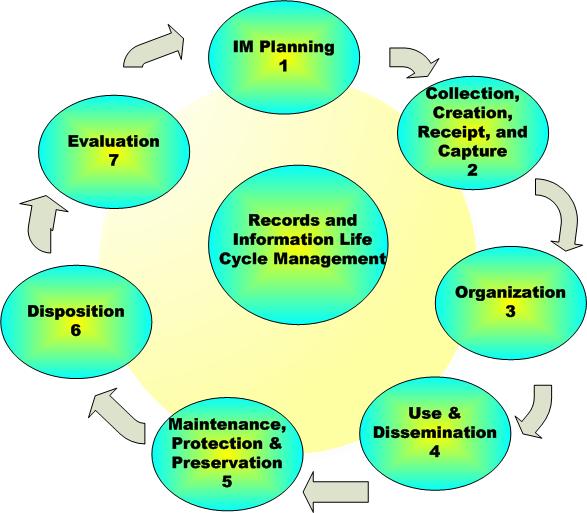
Library and Archives Canada has been promoting its Records and Information Life Cycle as a means to help users understand, plan, implement and improve their Information Management (IM) initiatives


copyright: HM Queen in Right of Canada

Accordingly, a year or so ago, we conducted a survey of 22 creators and users of scientific information to see which parts of the life cycle they regularly apply in the management of their own information. 

Through a series of detailed questions, we asked respondents whether or not they thought each stage of the cycle was applicable to their information management needs.  If it was applicable, we asked them whether or not they had planned to address that stage of the life cycle and the extent to which they had actually implemented any planned activities.

Copyright HM Queen in Right of Canada
The survey revealed that most respondents had initiated activities to plan for information needs, collect, create, receive and capture information, organize information, and use and disseminate information.  However an increasing number of respondents had not planned for the maintenance, protection and preservation of their  information, the disposition of their information after they were finished with it, or to evaluate the effectiveness of their IM practices after the project was over.  This was valuable information in telling us where we needed to direct our efforts.

Recently, I reanalyzed the results to better understand where we could use internal expertise to improve the management of records and information, and where we might need to draw on external expertise.

First I scored the respondents answers using the following scale: 0 = Not Applicable, 1 = Not Planned, 2 = Planned but not initiated, 3 = implemented and up to 25% complete, 4 = implemented and up to 75% complete, and 5 = implemented and 100% complete.

Copyright HM Queen in Right of Canada
Using Chris Collison's River diagram technique, I then plotted the minimum and maximum scores among all respondents for each stage in the life cycle.The area shown in blue in the diagram above is the area between the minimum and maximum scores.  The bottom bank shows the minimum level of attainment for each stage of the life cycle, the top bank shows the maximum level of attainment for each stage.

Collison suggests focusing on the widest parts of the "river" in order to leverage the most out of internal experience.  The diagram shows that for stages 1 and 3 in the life cycle, everyone surveyed is at least planning to implement relevant activities for their information, therefore, these stages should not be priority areas to focus on.  In stages 2, 3 and 6 some people have obtained a high degree of experience, having completed their planned activities for this stage, and it may be possible to share best practices.

For us the widest part of the river is at stages 2 and 6.  By sharing their best practices or by pairing individuals who have completed their activities with those who have not even planned activities, there is great potential to raise the lower scores.

Conversely, at stage 7 there is no one who has completed all their planned activities.  In this case, there is less internal expertise we can draw on and we may have to bring in external expertise to try and improve the scores.

Monday, February 28, 2011

Wednesday, February 23, 2011

Facilitating a culture of innovation through NRCan communities of practice and employee networks

Originally posted on an internal blog on 03/03/2011


There's a Dilbert cartoon I like in which Asok, the naive, Indian intern asks, "Who wants to share knowledge with me via our new intranet collaboration software?" After Dilbert dismisses Asok with a quip about his not having any knowledge to share, Wally, the completely shameless employee with no sense of loyalty confides, "I'm hoarding my knowledge in case I ever need it."

The cartoon points to the importance of organizational culture and trust in knowledge sharing – the activity through which knowledge (i.e., information, skills or expertise) is exchanged among colleagues, a community or an organization.
Photo credit: Roberta Gal

Organizations have recognized that knowledge constitutes a valuable intangible asset for creating and sustaining competitive advantage, and companies and governments have made considerable investments in IT infrastructure to promote knowledge sharing. In Natural Resources Canada (NRCan), we have a wiki, blogs, forums, SharePoint, and other tools. But, as Dilbert and Wally point out, technology constitutes only one of many factors that affect the sharing of knowledge in organizations.
Photo credit: Roberta Gal

That’s why I assembled a small, but ambitious, team of like-minded volunteers (link internal to GoC) to organize NRCan’s first Knowledge Share Fair (link internal to GoC), held on January 20, 2011, in Ottawa.  I wanted to explore ways to enhance the culture of collaboration and knowledge sharing in NRCan. In particular, I was interested in the role that communities of practice and employee networks play in fostering a culture of collaboration and knowledge sharing.
Communities of practice are groups of individuals who share a common interest in a specific area of competence and are willing to work together. Communities tend to be made up of employees who, unlike Wally and Dilbert, are passionate about a subject and who often work off the side of their desks to make a contribution. These employees are engaged in the sense that they are using their discretionary time to contribute to results that benefit the organization. But communities are hard to maintain. As a member of several communities of practice, I felt that there was value to be gained from just bringing communities together to share experiences in how they formed, sustained themselves and, in some cases, dissolved.
Photo credit: Roberta Gal

Based on feedback we received, the Share Fair was a resounding success, bringing together 80 registered participants, 16 diverse communities and networks active in NRCan, and four guest experts. Through presentations, panel discussions, training sessions, and a “community marketplace,” participants had the opportunity to find and connect with communities and networks to share their knowledge and experience about being in a CoP or network, and to better understand the relevance of CoPs and networks to NRCan.

The bilingual morning session, which was also webcasted, featured a keynote presentation by Dr. Kimiz Dalkir – an expert in knowledge management from McGill University – and a panel discussion featuring three leaders from CoPs active in NRCan:  Philippe Dauphin (Learning Organization CoP), Mark Kennedy (Managers’ Community) and Douglas Bastien (Web 2.0 Practitioners CoP). These speakers touched on the short-term and long-term value of CoPs and networks to both the organization and individual members – values that include improving business outcomes, developing organizational capabilities, improving the experience of work, and fostering professional development.


In the afternoon, participants broke into focused discussion groups to identify “quick wins” to maximize the value of CoPs and networks for both the department and the individual members. Quick wins were defined as things that could be done right away, with existing resources and that would have an impact in the next 6 months. Dozens of ideas were generated such as using collaborative tools and Share Fairs to share, learn and grow; incorporating CoP membership into learning plans; and telling success stories via our internal newsletter, at the management table, or via social media. Of particular note was the call by CoPs for senior managers to more explicitly recognize the successes of CoPs and networks and support practitioners’ participation – in essence, to create the space for CoPs and networks to flourish.
Photo Credit: Bruno Blanchard-Pillon

On the last point, it appears that the message has been heard at the most senior levels. Both the Share Fair and CoPs and employee networks were cited for their contribution to creating a collaborative and innovative workplace in the recently released Deputy Minister’s Report to the Clerk of the Privy Council on Natural Resources Canada’s 2010-11 Public Service Renewal Action Plan Achievements.  

For me, the discussions and outcomes from the Share Fair reinforced a view that despite all the technological tools at our fingertips, public servants are, more than ever, clamouring to be connected to one another in meaningful ways. This, for me, is the longer term legacy of CoPs and employee networks. They help foster a culture of collaboration by forging relationships that produce results and that integrate a diversity of experience and perspectives. They help engage employees by connecting people’s passions to their work and by fostering professional development and leadership experiences beyond the sector level. And they strengthen knowledge management by enhancing and deepening skills and expertise in the workforce and strengthening a culture of sharing that complements our wiki, blogs, forums and other tools that facilitate sharing.

Monday, February 14, 2011

Three behaviours exhibited by knowledge users and how collaborative tools can help them

I have made a couple of updates to my map of collaborative tools available in my workplace, but I still welcome any comments.


Part of the impetus for creating this map was that I have been asked to provide input on the ways that collaborative tools can be used to engage employees. Now, I am not sure what specifically is meant by this, but since I work in a science-based policy organization, it's probably fair to assume that this is about either engaging scientists more in the policy development process, or in bringing the two sides together to co-create policy solutions.
Either way, it caused me to think about how people use knowledge while doing their work and how they might use collaborative tools to help them.

As I stumbled my way through this thought experiment, I came upon a knowledge management framework presented by Chris Collison in a slide show on knowledge transfer. I've adapted his framework to describe the types of behaviours knowledge users exhibit before, during and after working on a problem as well as the specific actions they could take with the collaborative tools available in my workplace.

Collison's framework is pretty straightforward; individuals or teams start with a goal, they then apply knowledge to work on the issue, ultimately arriving at some result. As they move toward realizing their intended outcome, they have opportunities to learn before, during and after the process of using their knowledge to address the issue. The behaviours associated with learning before, during and after using the knowledge, I have called "knowledge pull", "interactive" and "knowledge push" to represent the principle way that knowledge flows between the person or team doing the work and the captured knowledge base. The specific actions I have listed are from the perspective of a policy analyst working in my organization with the online collaborative tools at their disposal. All this is of course qualified by the caveat that online collaborative tools are not the only way to interact with the knowledge contained in people and networks. One could, after all, walk down the corridor and talk with one's colleagues. However, since I have been asked to provide input on the ways collaborative tools could help engage employees in my workplace, that is where I have focused my thoughts. As usual, any comments or questions are welcome as this is still very early in its draft stage.